
Every year on March 8, International Women's Day (IWD) offers an opportunity to reflect on progress toward gender equality and the work that still lies ahead. This year’s IWD theme, Give to Gain, highlights the power of reciprocity and support: when we invest in others, whether through mentorship, advocacy, leadership, or other opportunities, we strengthen not only individuals but entire communities and professions. In engineering, that principle is especially powerful. Each act of support helps build a more inclusive, innovative, and resilient future.
Give to Gain resonates strongly with National Engineering Month and its call to action: Engineers Open Doors. As Canada celebrates IWD 2026 alongside National Engineering Month, the profession is highlighting how engineers open doors to new possibilities and futures. When engineers give their time, share their experiences, and champion equity, they open doors for the next generation—and in doing so, the profession gains new perspectives, stronger leadership, and greater impact.
In celebration of IWD 2026, we’re highlighting four women across the engineering ecosystem who are opening doors for the next generation. While we are profiling women in recognition of IWD, advancing equity in engineering is not the responsibility of women alone. Meaningful progress depends on the active participation of allies of all genders—leaders, colleagues, educators, and students—who are committed to challenging barriers and creating inclusive environments. Through their work, mentorship, and leadership, they embody the spirit of Give to Gain, demonstrating how supporting others today helps build a more inclusive engineering profession for tomorrow.
The regulator perspective: setting the tone at the system level
“When we invest in mentorship programs, we improve overall workplace morale.”
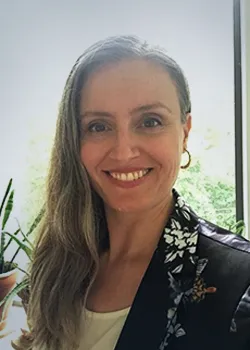
“Engineering regulators are essentially the gatekeepers of the profession,” explains Lisa Stepnuk, EIT, Director, Equity and Representation, at Engineers Geoscientists Manitoba. As such, regulators have unique tools to improve the profession, including the ability to survey practitioners, identify inequities, and design solutions.
For example, in 2021, Engineers Geoscientists Manitoba surveyed women who had left the profession over the preceding 15 years. The solvable themes that emerged included harassment, inequitable leave policies, bias in recognizing competency and assigning tasks, and a lack of equitable mentorship. “Now, we work to address these,” Stepnuk says.
The regulator helps open doors through initiatives such as the Manitoba 2030 Coalition, formed to advance gender equity in engineering. The coalition uses research findings to design professional development events and mentorship programs that target identified barriers.
Stepnuk explains what the profession as a whole gains: “When we equip ourselves with the competencies to identify, minimize and address harassment in our workplaces, we improve conditions for employees of all genders and identities. When we invest in leaves best practices, we retain parents of all genders and family structures, practitioners returning from medical or disability leave, and gender-affirming care. When we invest in mentorship programs, we improve overall workplace morale.”
Mentorship remains central to these efforts. The Women in Engineering and Geoscience Mentorship Program connects 150–200 students, interns, and professionals annually, building community in a field where many women have found themselves “the only one in the room, on site, or on the manufacturing floor.”
The long-term relationships formed through the program reflect a clear return on investment: when regulators help open doors, the entire profession gains.
The educator perspective: Creating ripples that last
“Without diversity, innovation is weakened. In that sense, opening doors is not symbolic, it is essential to engineering excellence.”
At the classroom and institutional level, educators are creating their own pathways for equity.
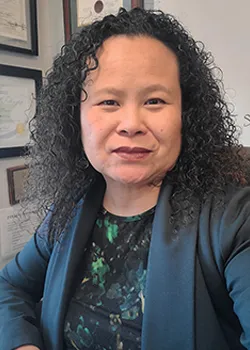
Amy Hsiao Krouglicof, P.Eng., professor at the Faculty of Sustainable Design Engineering at the University of Prince Edward Island, has witnessed firsthand the power of support. “When we don’t have inclusion…our ability to solve problems is actually compromised,” she says. “Without diversity, innovation is weakened. In that sense, opening doors is not symbolic, it is essential to engineering excellence.”
That philosophy comes to life through PROGRES (Promoting Girls in Research in Engineering and Sustainability), a five-week summer program she founded in 2017 with funding from the Natural Science and Engineering Research Council (NSERC)’s PromoScience program. Designed for girls and non-binary students in grades 11 and 12, the program pairs them with women engineering professors or engineering students, and gives them an independent research project. The program also often takes participants on site tours to engineering workplaces and visits with practising engineers.
The PROGRES program helps expose high school students to engineering, and helps them overcome what can often be intimidating for them and builds their confidence before they even arrive on campus in first-year engineering, Hsiao Krouglicof explains.
Now in its tenth year, PROGRES has grown into what she describes as a ripple effect. “One student goes back and brings in 10 of their peers who are now engineering students as well. Their family members know what engineering is. Their teachers, their counsellors know. And the students themselves become leaders. It’s not a one-person-wins thing. It’s everyone wins.”
The student perspective: Belonging builds the future
“That sense of belonging is what allows students to stay and to grow and succeed.”

Sameeah Choudhry, a third-year electrical engineering student at Lakehead University’s Barrie campus, understands the importance of mentorship and role models first-hand. She was the first in her family to attend university and the only woman in her initial cohort of 27 engineering students. “Equity doesn’t just happen on its own—it requires intentional support,” she explains.
Now committed to opening doors for others, Choudhry serves as Governance Commissioner for the Canadian Federation of Engineering Students (CFES) and is active locally with her campus engineering society. She is helping strengthen the Barrie STEM Hub into an inclusive space that ensures students do not feel as though they are navigating engineering alone.
“Every time someone chose to support me, whether that was through mentorship or by encouraging me to step up into leadership roles, it made the difference between me feeling isolated and feeling like I belonged,” Choudhry explains. “And that sense of belonging is what allows students to stay and to grow and succeed.”
Choudhry also volunteers as Site Coordinator for Lakehead University at Let’s Talk Science. She brings science, technology, engineering, and math (STEM) experiences to K–12 students in Barrie, Midland, and nearby Indigenous communities, emphasizing that early exposure and visible role models can change how young people see themselves in engineering.
“I think many students decide engineering isn’t for us long before we even understand what engineering is,” she says. “Inclusive, hands-on STEM experiences like the ones that I provide at Let’s Talk Science, and diverse role models at an early age can completely change that narrative.”
The industry perspective: Paving the way forward
“We’re always just trying to bring people in to understand that this is a potential for you.”
For Diana Young, Senior Vice President, Strategy, Engineering and Operations at Spin Master, giving to gain and opening doors is integral to the company’s culture. Spin Master supports outreach initiatives like their Future of Play days, where they host K–12 students at their Toronto headquarters to explore science, technology, engineering, arts, and math (STEAM) careers and experience how toys and games are engineered. The company also participates in Toronto Doors Open, giving visitors a behind-the-scenes look at engineering in action.
Spin Master’s Future of Play Scholarship Program has supported 40 emerging creators from underrepresented communities in Canada and the US since 2021, offering post-secondary scholarships and mentorship. The company also sponsors organizations such as EngiQueers Canada to highlight the value of diverse perspectives in engineering.
“We’re always just trying to bring people in to understand that this is a potential for you,” Young says, emphasizing that engineering can be creative, playful, and impact-driven.
Of course there are practical gains to this outreach work, Young says: outreach strengthens the future talent pipeline. But at its core, this work and Spin Master’s support for underrepresented groups is a reflection of the company’s values and is an expectation from staff.
“Giving back matters to our employees,” Young explains. “We’ve created this culture of openness and acceptance. It matters to me and it matters to [our staff] that we are facilitating that outside of our space and showing that those workplaces exist [in engineering]—and we are one of them.”
Across regulators, academia, student leadership, and industry, the principle of Give to Gain resonates as a practical strategy to strengthen engineering for everyone. Mentorship, advocacy, and visible role models emerge repeatedly as essential tools to open doors and cultivate a sense of belonging. Programs that provide early exposure, hands-on experiences, and inclusive learning environments break down barriers and empower students from all backgrounds and experiences to pursue engineering confidently and persist through challenges.
Concludes Engineers Canada’s Jeanette Southwood, P.Eng., Executive Vice-President, Strategic Partnerships and Corporate Affairs, “As we celebrate International Women’s Day 2026 alongside National Engineering Month, these stories underscore that when we give our time, expertise, and support, we not only empower the next generation—we strengthen the profession as a whole. In every classroom, mentorship program, workplace, and community outreach, engineers and engineering students who are opening doors for others ensure that engineering continues to thrive with diverse perspectives, resilient leadership, and shared opportunity for all.”