
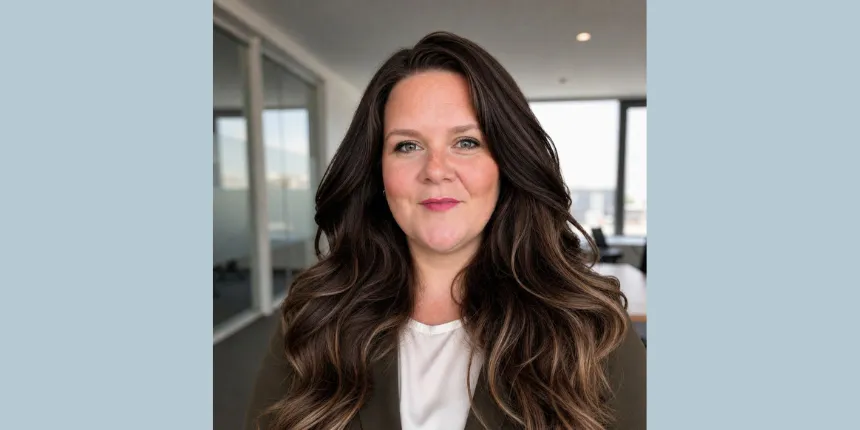
Laura Paul, P.Eng., MBA, PMP, is a national award-winning engineering leader with over 15 years of engineering experience across design and construction – from her early onsite field engineering days to leading operations within an international engineering company. Her career has been grounded in delivering results while leading strong, people-centered teams.
Now serving as the Equity and Engagement Lead at Engineers Canada, Laura partners with engineering employers to strengthen the profession through employer benchmarking, advancing goals like 30 by 30, and driving the value of engineering licensure (Pathway to Engineering).
In this Behind the Scenes with Engineers Canada interview, Laura reflects on her journey, the kind of profession we have the opportunity to build, and how that perspectives shapes the work she leads today.
- What drew you to a career in engineering?
I grew up around engineering. My grandfather was a civil engineer with public works, and I saw how much pride he took in solving real problems. He was always building, fixing, improving, usually with a project on the go. That idea of engineering as ‘care made practical’ really stuck with me.
My mom has her masters in statistics, so math and analytical thinking were always part of our environment too. I was naturally drawn to understanding how things worked, but what really pulled me in was the impact.
I remember realizing pretty early on that there were Lego sets that I wanted. I wanted the construction sets, the ones where you actually built something. So I innovated a way to change my subscription, and suddenly the sets got a lot more interesting.
That curiosity, and a tendency to challenge expectations and the way we have always done things, has stayed with me. Engineering felt like a place where that curiosity could thrive.
- Can you tell us about your current role as Equity and Engagement Lead at Engineers Canada and how your journey lead you into a focus in this area?
My career has given me a broad view of the engineering ecosystem. I started in construction, moved into sustainable building design, then as a consultant for federal clients, and later led operations within engineering organizations.
That range shaped how I think. I have sat on many sides of the table, with a front row seat to where projects and teams succeed…and where things go off track.
Across all of those roles, it was clear that engineering outcomes were not driven by technical expertise alone. They were heavily shaped by leadership and the conditions engineers work within. I started to recognize that engineering culture is something we should examine with the same seriousness we bring to technical problems.
That is what led me to Engineers Canada. In my current role, I focus on strengthening those conditions across the profession. That includes supporting licensure pathways, working with employers, and advancing national initiatives like 30 by 30.
At its core, my work is about strengthening the conditions where good engineering can happen.
- Is there a moment in your career that made you realize how important equity and engagement work is within engineering?
Within the first week or two of my engineering career, I remember being on a construction site and hearing, “What is SHE doing here?” Individually, the moment was easy to dismiss. But over time, those moments added up: having my technical perspective overlooked, being excluded from important conversations or networks, even being mistaken for a student (when I was leading a team of consultants).
For a long time, I thought these might be isolated experiences. But through my work, and after hearing countless stories from others across the profession, it sadly became clear they are not.
This matters not just because of how it impacts individuals, but because of what it means for engineering itself. When perspectives are missing? Risk increases for engineering decisions and designs. When engineering environments aren’t safe or inclusive of certain demographics? The best and the brightest minds and talent leave for more attractive offerings. When people experience engineering culture as unwelcoming or have been treated unfairly? The public trust & high ethical ideals of the profession are negatively impacted.
I want to help build a profession where people feel safe to share unique perspectives, within cultures that attract the best of the best, and within a profession known for strong ethics and public trust, working to solve the most pressing challenges that face us in Canada and beyond.
- What are some initiatives you’re currently working on at Engineers Canada?
Right now, my work focuses on three main areas:
- The first is licensure pathways. We are working to improve clarity, access, and support for engineers moving from education to licensure. Pathway to Engineering focuses on debunking myths and removing uncertainty around the value of licensure and how to obtain your P.Eng. This includes advancing the 30 by 30 goal as we move into the final stretch before 2030.
- The second is employer support. We are developing the Engineering Employer Excellence Benchmark to help organizations strengthen culture, decision making, and performance. Organizations interested in participating in the 2026 pilot can sign up, HERE.
- The third is national culture insights. We are advancing a national engineering culture and experience survey to better understand what is working well across the country, and areas where additional focus would create largest positive impact.
Together, this work is about creating stronger systems of support for engineers and employers, ultimately driving better engineering outcomes.
- For those who may not be familiar, what is 30 by 30 and what can upcoming conference attendees expect?
The 30 by 30 goal is a national initiative to increase the percentage of newly licensed engineers who are women to 30 percent by 2030. It is a clear, measurable target designed to drive action across the profession. As we get closer to 2030, it will require continued and focused effort to supporting more engineering educated women to pursue licensure.
The 30 by 30 Conference, held as part of CCWESTT this May, is where that work comes to life. It brings together employers, regulators, and professionals to share practical strategies, build connections, and move ideas into action.
For organizations navigating talent shortages and increasing complexity, this is a key opportunity to build a stronger and more sustainable engineering workforce. It’s an opportunity you won’t want to miss!
- From your perspective, what have been some of the biggest shifts you’ve seen for women in engineering over the past few years?
Through my personal arts-based research project, the ⚡reEngineered⚡portrait series, I have had the opportunity to hear directly from engineers across Canada. Some stories were challenging. Many were hopeful.
Some of the most encouraging shifts I heard included the following:
- More women are entering engineering university programs (with some programs hitting over 30-50% representation).
- The next generation appears less willing to tolerate environments where they cannot contribute fully. They are more willing to speak up and push for change.
- Post-COVID, there is increasing attention and awareness on flexibility and support for parents, especially when returning to work.
- Some women are choosing entrepreneurship as a viable path to autonomy, flexibility, and respect.
- Technological advancements (like AI) are bringing more awareness and stronger focus on topics like ethics and our role & responsibility as engineers.
- When you think about the future of engineering in Canada, what gives you the most optimism right now?
As engineering continues to evolve, the differentiator will not just be technical expertise. It will be how we collaborate, what ethical standards we uphold, and how we ensure we are bringing forward the best thinking from brilliant and diverse teams.
The future of engineering will not be defined by technical skill alone. It will be defined by the quality of our decisions. There is a real opportunity to clearly define engineering not just by technical excellence, but also by integrity, accountability, and impact.
If we get that right, if we find a way to build environments where everyone can thrive and decisions are made with both scientific rigor and humanistic care, we’ll be in the strongest position to take on whatever challenges comes next.